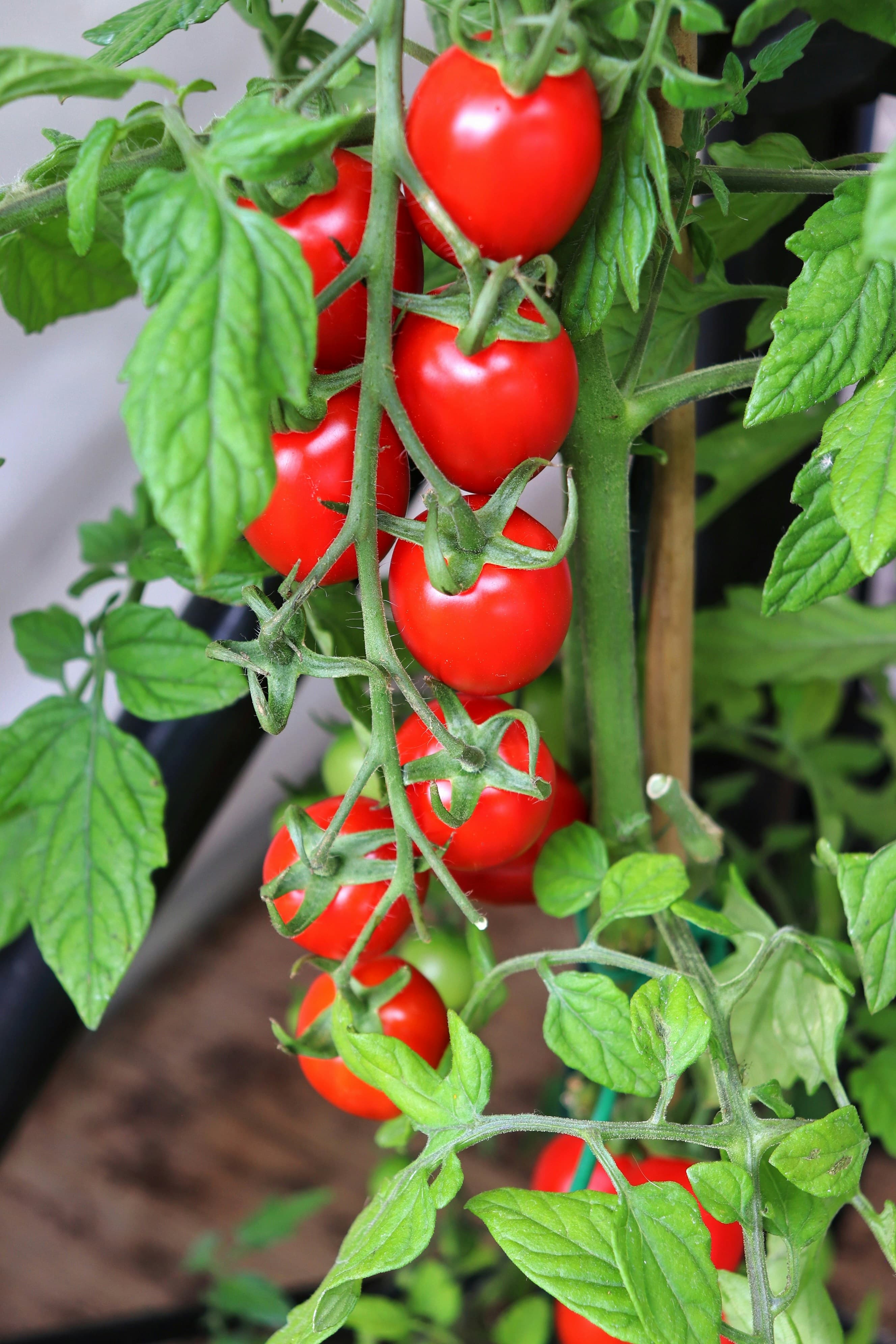
TOMATO AGRONOMY GUIDE – KENYA (OPEN FIELD & GREENHOUSE)
📋Crop Overview
Crop Name: Tomato
Botanical Name: Solanum lycopersicum
Economic Importance:
Tomato is one of Kenya’s most important vegetable crops for domestic markets, processing, and high-value supply chains (hotels, supermarkets). It provides strong income potential but requires disciplined pest, disease, and water management.
📋Agro-Ecological Suitability (Kenya AEZ)
Tomatoes grow in many zones, but yield and disease pressure vary strongly with humidity and temperature.
| AEZ Zone | Typical conditions | Suitability | Notes |
|---|---|---|---|
| Upper Highlands (UH) | Cool, wet | ⚠️ Moderate | High late blight risk; raised beds + strong fungicide program |
| Lower Highlands (LH) | Cool–moderate | ✅ Good | Good quality; manage blights and bacterial diseases |
| Upper Midlands (UM) | Warm–moderate | ✅ Excellent | Top zone for open-field; strong pest pressure (Tuta, whitefly) |
| Lower Midlands (LM) | Warm, drier | ✅ Good | Needs irrigation; heat stress can reduce fruit set |
| ASAL / Lowlands | Hot, dry | ⚠️ Limited | Only with irrigation + heat-tolerant varieties + strong IPM |
Best performance: UM and LH zones with irrigation control and good hygiene.
📋Optimal Growing Conditions (Refined)
- •Altitude: ~700–2,100 m a.s.l.
- •Temperature: Day 21–27°C, Night 15–20°C (optimum ~24°C)
- •Rainfall/water: reliable moisture; avoid prolonged leaf wetness
- •Soil pH: 6.0–7.0
- •Soil: well-drained sandy loam to loam, high organic matter
- •Sunlight: full sun (6–8+ hours/day)
- •Drainage: key—tomato hates waterlogging (bacterial wilt risk)
Most tomato failures in Kenya come from poor nursery hygiene, Tuta absoluta, whiteflies/viruses, and bacterial wilt.
📋Variety Selection (Practical)
Determinate (Bush; 75–95 days after transplanting)
Best for open-field, concentrated harvest, processing/local markets:
- •Rio Grande, Roma VF, Cal J, Marglobe
Indeterminate (Vining; 90–150+ days)
Best for fresh market and greenhouse; continuous harvest:
- •Kilele F1, Anna F1, Eden F1, Rambo F1, Money Maker (depending on system)
Cherry Tomatoes (niche/high value)
- •Sweet Million, Super Sweet 100
Selection tips
- •Choose varieties with:
- •tolerance/resistance to TYLCV (where whiteflies are high)
- •tolerance to common leaf diseases
- •market-preferred size/shape
📋1) Nursery Management (High-Impact Section)
Nursery Site & Media
- •Well-drained site near water
- •Use raised beds or trays to reduce damping-off
- •Media guide: topsoil + well-decomposed manure + sand (or sterile commercial media)
Seed Rate
- •200–300 g seed typically covers seedlings for ~1 ha (depends on spacing and germination %)
Sowing
- •Depth: 0.5–1 cm
- •Germination: 6–10 days at warm temperatures
- •Nursery duration: 4–6 weeks (4–6 true leaves)
Nursery Best Practices
- •Sterilize media (solarization or approved methods)
- •Keep nursery weed-free
- •Avoid overwatering (damping-off)
- •Start hardening 7–10 days before transplanting (reduce shade, reduce water slightly)
📋2) Land Preparation & Transplanting
Field Preparation
- •Deep ploughing to ~30 cm
- •Incorporate manure/compost (improves moisture holding and structure)
- •Form raised beds (15–20 cm) in wet zones
- •Install drip irrigation before transplanting (recommended)
Transplanting
- •Transplant late afternoon/cloudy day
- •Water nursery before lifting seedlings
- •Plant at same depth as nursery (avoid burying the stem too deep in disease-prone soils)
Spacing (Match variety/system)
- •Determinate: 60 × 45 cm (~37,000 plants/ha)
- •Indeterminate staked: 75 × 60 cm (~22,000 plants/ha)
- •Greenhouse strings/trellis: denser patterns depending on trellis design
📋3) Nutrient Management (Refined, Result-Oriented)
Tomatoes need strong K and Ca for fruit quality and shelf life, plus balanced N to avoid excess foliage.
Typical Nutrient Demand (per hectare, guide)
- •N: 120–180 kg
- •P₂O₅: 60–100 kg
- •K₂O: 150–250 kg
- •Calcium: critical for preventing BER
- •Plus Mg + micronutrients (B, Zn, Fe, Mn)
Core Fertility Principles
- •Build soil with manure + basal fertilizer
- •Split nitrogen to reduce leaching and excessive vegetative growth
- •Increase potassium from flowering onward
- •Start calcium support before fruit bulking
Blossom End Rot (BER) Reality Check
BER is mostly triggered by:
- •irregular watering
- •root stress
- •high salts
- •excess N —not only “low calcium in soil”.
📋4) Water Management
Water Need
- •Tomatoes require consistent moisture, especially during:
- •flowering
- •fruit set
- •fruit bulking
Practical Water Rules
- •Avoid wet–dry cycles (fruit cracking + BER)
- •Mulch beds to stabilize moisture and reduce weeds
- •Prefer drip irrigation to reduce foliar diseases
Avoid overhead irrigation in high disease pressure zones.
📋5) Staking & Pruning (Indeterminate)
Staking/Trellising
- •Install 1–2 weeks after transplanting
- •Use stakes + twine or vertical strings
Pruning
- •Remove suckers (weekly) to maintain 1–2 main stems (system dependent)
- •Remove lower leaves touching soil (reduces disease splash)
- •Do not over-prune during heat stress (sunscald risk)
📋6) Pest Management (Kenya Priority Pests)
Key Pests
- •Tomato leafminer (Tuta absoluta) – #1 pest in many zones
- •Whiteflies (Bemisia tabaci) – TYLCV vector
- •Fruitworms / bollworms (Helicoverpa armigera)
- •Thrips – virus vector potential
- •Aphids
- •Spider mites (hot/dry periods)
IPM Actions (Most Effective)
- •Start clean: healthy seedlings, clean field edges
- •Monitoring: sticky traps + scouting weekly
- •Exclusion (greenhouse): insect nets on vents
- •Rotate insecticide modes of action (resistance is common)
- •Remove heavily infested leaves/fruits and destroy properly
Tuta management fails when spraying starts late or when the same chemistry is repeated.
📋7) Disease Management (Kenya Reality)
Major Diseases
- •Early blight (Alternaria) – common in warm/humid seasons
- •Late blight (Phytophthora) – highlands/cool wet periods
- •Septoria leaf spot
- •Bacterial wilt (Ralstonia) – worst in warm soils and poor drainage; no cure
- •Bacterial speck/spot – cool wet conditions
- •Fusarium & Verticillium wilts – soil-borne
- •Viral diseases: TYLCV (whitefly), ToMV, others
Bacterial Wilt (No Cure)
Prevention package
- •avoid planting tomatoes in known infected fields
- •rotate 2–4 years with non-solanaceous crops
- •improve drainage and avoid flooding
- •sanitize tools
- •consider resistant varieties where available
Fungicide Strategy (Principles)
- •Begin protectants early in risky seasons
- •Ensure good coverage (undersides too)
- •Rotate modes of action to slow resistance
- •Reduce leaf wetness with drip irrigation and proper spacing
📋8) Weed Control
Critical weed-free period: first 6–8 weeks after transplanting
- •Use mulching (very effective)
- •Hand weed shallowly to avoid root damage
- •Keep field edges clean (reduces pest reservoirs)
📋9) Harvesting & Post-Harvest
Harvest Stage by Market
- •Long distance: breaker/turning stage
- •Local market: pink to light red
- •Processing: full red ripe
Harvesting best practice
- •Pick in cool hours
- •Handle gently; avoid bruising
- •Grade immediately; remove damaged fruits
Post-harvest basics
- •Use clean crates (not sacks)
- •Keep fruit shaded and cool
- •Avoid chilling injury (very cold storage damages quality)
📋Expected Yields (Kenya-Realistic)
- •Open field (good management): 30–70 t/ha depending on variety/system
- •Greenhouse (intensive): higher yields possible with good fertigation + pest exclusion
Yield drivers: seedling quality + Tuta control + consistent irrigation + balanced K/Ca nutrition + disease prevention.
📋Key Success Factors
✅ Produce strong, clean seedlings (sterile media, avoid damping-off)
✅ Choose correct variety for system and disease pressure
✅ Use raised beds and drip irrigation where possible
✅ Maintain consistent moisture (avoid BER and cracking)
✅ Stake/prune indeterminate tomatoes properly
✅ Aggressive IPM for Tuta and whiteflies with rotation of modes of action
✅ Strong prevention against blights and bacterial wilt
✅ Harvest at the right maturity for your market
Find Jojemi Products for Tomatoes
All products mentioned in this guide are available through our network of 200+ authorized distributors across Kenya.
Need Expert Advice?
Our agronomists provide personalized guidance for your tomatoes farming operation.
Call Us
+254 795 364 079Email Us
info@jojemieastafrica.co.keVisit Us
Solitaire Business Park
Juja, Nairobi


